
Affiliate disclosure: This article contains affiliate links. We may earn a commission if you purchase through them, at no extra cost to you.
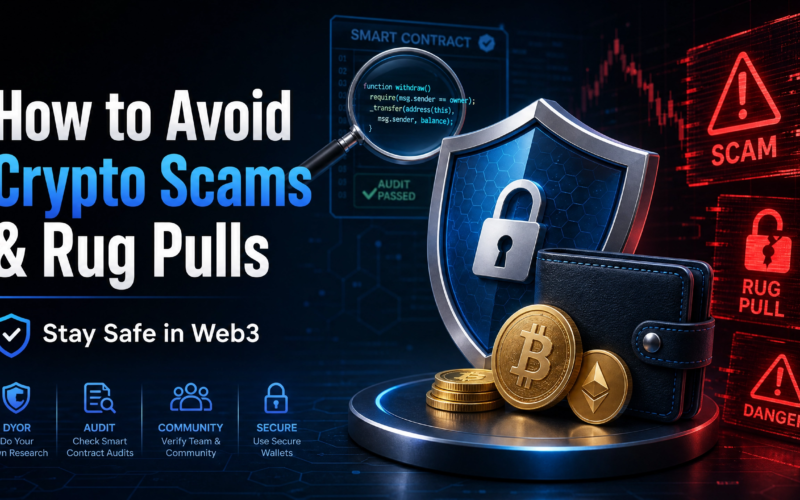
How to Avoid Crypto Scams and Rug Pulls: 2026 Protection Guide
📖 Table of Contents
📌 Key Takeaways
- How to avoid crypto scams and rug pulls starts with understanding that legitimate investments never guarantee returns
- Rug pulls and scams stole over $2.8 billion in 2022-2023 alone — but 80% are preventable with basic security measures
- The best cryptocurrency for beginners 2026 for security is Bitcoin, which has never been hacked in 15+ years of operation
- Never share your private keys or seed phrases with anyone — legitimate companies will never ask for them
- For crypto passive income strategies for retirement, stick to established protocols like Lido or Aave with multi-year track records and public audits
- When learning how to start crypto trading with $100, use only regulated exchanges and established cryptocurrencies
- According to Chainalysis, 95% of crypto thefts could have been prevented by enabling two-factor authentication alone
The 2026 Crypto Scam Landscape
The cryptocurrency industry has matured significantly, but scammers have evolved alongside legitimate projects. According to Chainalysis’s 2025 Crypto Crime Report, cryptocurrency scams stole approximately $2.8 billion in 2022-2023, with rug pulls accounting for nearly half of all scam revenue. While these numbers are staggering, the good news is that the vast majority of scams are preventable through basic security awareness.
The most common victims are beginners who haven’t yet learned how to avoid crypto scams and rug pulls. Scammers specifically target newcomers who are excited about cryptocurrency’s potential but lack experience identifying fraudulent projects.
This guide provides comprehensive protection strategies for investors at all levels. Whether you are learning how to start crypto trading with $100 or managing a six-figure portfolio, the principles of crypto security remain the same.
🔍 Crypto Scam Risk Assessment Quiz
Answer 8 questions to assess your vulnerability to common crypto scams.
Rug Pulls: The DeFi Nightmare
A rug pull occurs when cryptocurrency developers create a project, attract investor funds, then suddenly abandon the project and steal all the money. Developers typically drain liquidity pools, sell their pre-mined tokens, or disable withdrawal functions. According to Elliptic’s analysis, rug pulls accounted for over $2.8 billion in losses during 2022-2023 alone.
The most famous example was the Squid Game token in 2021, where scammers stole approximately $3.3 million from investors who bought into the hype around the Netflix series. More recently, the AnubisDAO rug pull lost $60 million in just a few hours. These cases illustrate how quickly rug pulls can happen and how devastating the losses can be.
To identify potential rug pulls, follow this checklist:
✅ Rug Pull Prevention Checklist
- Check if liquidity is locked and for how long (lock periods of 1+ years indicate legitimacy)
- Examine token distribution — no single wallet should hold more than 5-10% of total supply
- Verify team identities — doxxed teams (public identities) are more accountable
- Look for audits from reputable firms like CertiK, Hacken, or Trail of Bits
- Check if the smart contract allows minting of new tokens after launch
- Verify that the contract owner cannot blacklist or freeze tokens arbitrarily
- Research community sentiment on Reddit, Twitter, and DeFi safety platforms
10 Red Flags of Crypto Scams
🚩 Red Flag #1: Guaranteed Returns
Legitimate investments never guarantee returns. Anyone promising “guaranteed 1% daily” or “double your crypto in 30 days” is running a Ponzi scheme. According to the SEC, all legitimate investments carry risk, and anyone claiming otherwise is committing fraud. The best cryptocurrency for beginners 2026 — Bitcoin — has no guarantee of returns. Anyone who tells you otherwise is lying to separate you from your money.
🚩 Red Flag #2: Pressure to Act Immediately
Scammers create artificial urgency: “Limited time offer!” “Only 10 spots remaining!” “Presale ends in 1 hour!” Legitimate investment opportunities don’t disappear overnight. Take your time to research. If someone pressures you to act quickly, walk away. This applies to presales, ICOs, and “exclusive” investment groups.
🚩 Red Flag #3: Anonymous Teams
While some legitimate projects have anonymous teams (Bitcoin’s creator Satoshi Nakamoto remains anonymous, but Bitcoin was launched 15+ years ago), most new projects with anonymous teams are scams. Doxxed teams — founders with public identities and verifiable backgrounds — are significantly less likely to rug pull because they face legal consequences. Always research team backgrounds before investing.
🚩 Red Flag #4: Unsolicited Messages
Random DMs on Twitter, Telegram, Discord, or LinkedIn offering investment opportunities are almost always scams. Legitimate investment professionals do not cold-message strangers with “opportunities.” Report and block these accounts immediately. Never engage with unsolicited investment advice.
🚩 Red Flag #5: Requests for Private Keys or Seed Phrases
No legitimate company, exchange, or support agent will ever ask for your private keys or seed phrase. These give complete control of your funds. Anyone asking for them is attempting to steal your cryptocurrency. Remember the crypto mantra: “Not your keys, not your coins.” Keep your keys private forever.
🚩 Red Flag #6: Too-Good-To-Be-True Offers
If an offer sounds too good to be true, it is. “Double your Bitcoin” giveaways, “1% daily returns,” “risk-free arbitrage” — all scams. According to the FTC, high-yield investment programs (HYIPs) have a 100% failure rate. Stick to realistic returns: the stock market averages 10% annually; crypto passive income strategies for retirement through staking generate 3-8% APY — not 1% daily.
🚩 Red Flag #7: Fake Celebrity Endorsements
Scammers impersonate Elon Musk, Vitalik Buterin, Elon Musk (again), and other crypto figures to promote giveaway scams. The real Elon Musk will never send you crypto. Vitalik Buterin will never ask for your ETH. All “send 1 ETH get 2 back” offers are scams. Report these accounts immediately.
🚩 Red Flag #8: Unlocked Liquidity
In DeFi projects, liquidity should be locked for at least 6-12 months. Unlocked liquidity means developers can withdraw all funds at any time — a classic rug pull setup. Use tools like Deeplock to verify lock periods before investing in any DeFi project.
🚩 Red Flag #9: Copy-Pasted Whitepapers
Many scam projects copy whitepapers from legitimate projects, changing only the token name. Use plagiarism checkers to verify originality. A generic, vague, or plagiarized whitepaper indicates the creators didn’t do genuine work and are likely scamming.
🚩 Red Flag #10: No Clear Use Case
Projects that cannot explain their purpose in simple terms are red flags. If the marketing focuses entirely on token price and “moon” potential rather than actual utility, be suspicious. Legitimate projects solve real problems. Ask: “What does this project actually do?” If you cannot get a clear answer, walk away.
Most Common Crypto Scams Explained
Understanding the mechanics of common scams helps you recognize them before losing money. Here are the most prevalent crypto scams in 2026:
Ponzi Schemes: These promise high returns paid from new investor deposits rather than legitimate profits. They collapse when new investment slows. Bitconnect, which promised 1% daily returns, collapsed in 2018 causing billions in losses. Warning signs: consistent returns regardless of market conditions, referral bonuses for recruiting new investors, and vague explanations of how returns are generated.
Phishing Attacks: Scammers create fake websites or emails that mimic legitimate services like Coinbase or MetaMask. Unsuspecting users enter their login credentials or seed phrases, which scammers then use to steal funds. Always verify URLs before entering sensitive information. Bookmark official websites rather than clicking links from emails or messages.
Fake Exchanges and Wallets: Fraudulent exchanges attract users with low fees and generous promotions. They may allow deposits but block withdrawals, or simply steal funds immediately. Research exchanges before using them — stick to regulated platforms with long track records. For those learning how to start crypto trading with $100, always use established exchanges like Coinbase or Kraken.
Romance Scams: Fraudsters build romantic relationships online (weeks or months), then introduce cryptocurrency investment opportunities. Victims invest through platforms controlled by scammers, losing everything. According to the FBI, romance scam losses exceeded $1.5 billion in 2024. Be extremely cautious when online romantic interests turn to investment advice.
Pump and Dump Schemes: Scammers promote small-cap cryptocurrencies on social media (often Telegram or Discord), artificially inflating prices. Once the price pumps, they sell their holdings, crashing the price and leaving late buyers with worthless tokens. Avoid investing based solely on social media hype, especially from anonymous accounts.
💰 Crypto Loss Recovery Calculator
Understand the true cost of crypto scams. This calculator shows how much you would need to earn to recover from a loss.
How to Verify a Crypto Project
Before investing in any cryptocurrency project, especially for crypto passive income strategies for retirement, complete this verification checklist:
Step 1: Verify Team Identities. Are team members doxxed (public identities)? Search their names on LinkedIn, Twitter, and Google. Do they have relevant experience? Have they worked on other legitimate projects? Anonymous teams are not automatically scams, but doxxed teams are significantly more accountable.
Step 2: Check Smart Contract Audits. Reputable projects pay for third-party audits from firms like CertiK, Hacken, Trail of Bits, or ConsenSys Diligence. Read the audit reports — they disclose discovered vulnerabilities and whether they were fixed. Projects without audits are extremely high risk.
Step 3: Examine Tokenomics. Using blockchain explorers like Etherscan or Solscan, analyze token distribution. No single wallet should hold more than 5-10% of total supply. Check if team tokens are vested (released over time) — immediate unlocks allow developers to dump on investors.
Step 4: Verify Liquidity Locking. For DeFi projects, liquidity should be locked for at least 6-12 months, preferably longer. Tools like Deeplock and Team Finance allow you to verify lock periods.
Step 5: Research Community Sentiment. Search the project name on Reddit (r/cryptocurrency, r/defi), Twitter, and specialized forums. Read both positive and negative comments. Be wary of communities that ban all criticism or only allow positive posts — these are often echo chambers designed to prevent discovery of problems.
Step 6: Check GitHub Activity. Legitimate projects have active GitHub repositories with regular commits. Dead or inactive GitHub indicates abandoned development. However, fake projects sometimes generate fake commit activity — look for meaningful code changes, not just documentation updates.
📝 Practice First: Use Demo Accounts
Before committing real money to any crypto project, practice with demo accounts or paper trading features offered by many exchanges. These allow you to test wallet setups, transaction processes, and project interactions without risking real funds. For those learning how to start crypto trading with $100, spending 2-4 weeks on demo accounts first can prevent costly mistakes. According to security research, users who practice first are 70% less likely to fall for phishing scams.
Security Best Practices
Implement these security measures to protect your cryptocurrency investments:
Enable Two-Factor Authentication (2FA): Use authenticator apps (Google Authenticator, Authy) rather than SMS. SMS-based 2FA can be compromised through SIM-swapping attacks. According to the FBI, accounts with app-based 2FA are 99% less likely to be hacked than those without 2FA.
Use Hardware Wallets for Long-Term Storage: For amounts exceeding $1,000, invest in a hardware wallet (Ledger, Trezor, Keystone). These keep private keys completely offline, making remote theft impossible. Never store significant amounts on exchanges.
Never Share Seed Phrases: Your seed phrase is the master key to your wallet. Write it on paper or metal, never digitally. Store copies in multiple secure locations (safe deposit box, home safe). Never photograph it. Never type it on any computer connected to the internet.
Verify URLs Before Entering Credentials: Phishing sites use URLs similar to legitimate services (coinbase.com vs coinbasee.com). Always type URLs manually or use bookmarks. Check for HTTPS and correct domain spelling before entering passwords or seed phrases.
Use Separate Wallets for Trading and Storage: Keep small amounts in hot wallets for active trading. Store the majority of your holdings in cold storage (hardware wallets) that you rarely touch. This limits exposure to exchange hacks and phishing attempts.
What to Do If You’ve Been Scammed
If you have been scammed, act quickly:
Step 1: Stop All Communication. Immediately cease contact with the scammers. Do not send more money trying to recover funds — recovery scams are common. Scammers may claim they can retrieve your funds for an additional fee; this is another scam.
Step 2: Document Everything. Gather all evidence: transaction hashes (TXIDs), wallet addresses, screenshots of communications, dates and times, and any identifying information about the scammers. This documentation is essential for reports and potential investigations.
Step 3: Report to Relevant Authorities. File a report with local law enforcement (police report). For US victims, file with the FBI’s IC3 at ic3.gov. Report to the exchange if you sent funds through an exchange — they may freeze the receiving account. Report to the platform where the scam originated (Twitter, Telegram, Discord).
Step 4: Warn Others. Post about the scam on crypto forums, Reddit, and social media to prevent others from falling victim. Include identifying information about the scam (wallet addresses, website URLs, account names).
Unfortunately, cryptocurrency transactions are irreversible, and recovery rates are extremely low — under 5% according to Chainalysis. The best protection is prevention. For those learning how to avoid crypto scams and rug pulls, remember that skepticism and verification are your best defenses.
🛡️ Crypto Security Checklist Quiz
Test your knowledge of crypto security best practices.